Rowan's mental breakdown
Blood CanticleRowan's mental breakdown is the recurrent rupture in a life organized around work, responsibility, and the effort to contain painful memories. Her public vocation at Mayfair Medical Center has become both a vast project of healing and an escape from private life; when that structure fails to hold, guilt and traumatic family history reassert themselves, culminating in her disappearance into the garden to dig for remains she already knows have been removed.
Work as refuge and pressure
Michael describes Rowan as working at Mayfair Medical to the point of exhaustion, leaving herself no quiet inner life beyond the institution. Her vocation has produced a world that depends on her: Mayfair family members come to study medicine, a new hospital wing is under way, and she oversees the Brain Study Program and four research projects. Michael sees the same commitment as both admirable and dangerous: it is a complete vocation, but also a complete escape. When Rowan's breakdown deepens, the scale of what she carries makes the crisis larger than a private collapse; the people and projects gathered around her all appear to rest on her energy.
The narration presents this public competence beside a more fragile private reality. Rowan has only begun fulfilling her ambitions at Mayfair Medical Center, described as an engine of continuous healing, while her sanity remains vulnerable to recurrent episodes of madness. In those episodes she withdraws from her designs, becomes submerged in memories and guilt, and loses judgment and proportion. She can turn toward self-condemnation and imagined escape from the expectations that her own work has created. The contrast is not simply between success and failure: the institution that gives her purpose also furnishes a way to avoid an inner life that cannot be managed by professional achievement alone.
The garden and the return of the past
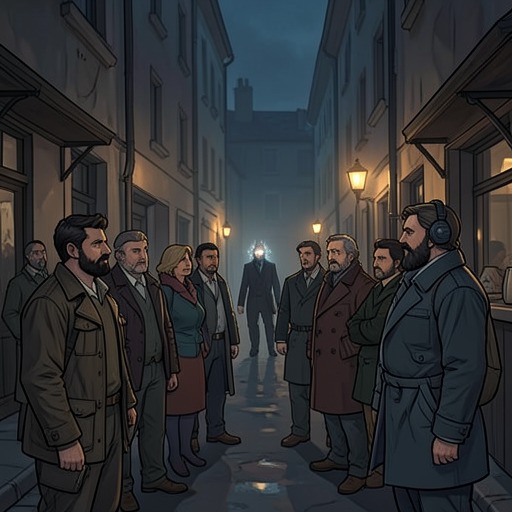
One night, Rowan lies awake for hours, whispering and refusing to speak with Michael. She will not get ready for bed or take food or drink. Michael follows the advice he has been given: he lies beside her, holds her, and sings melancholy songs, recognizing in that habit a family inheritance associated with Tyrone McNamara and Oncle Julien. He falls asleep beside her. When he wakes, Rowan is gone.
Michael finds her barefoot on the lawn beneath an oak, wearing a silk suit and digging with a gardener's large shovel. She is searching where the remains had been, speaking of Emaleth and Lasher and cursing herself. Michael tries to stop her and remind her that the remains were removed; when Mayfair Medical was completed, Rowan had already sent a team to scour the area. The episode makes the past physically present through repetition: knowledge that the remains are gone does not prevent her from returning to the place and digging. Her breakdown is thus shown not as a lack of information but as a moment when knowledge cannot contain memory, grief, and guilt.
The history she later recounts gives that recurrence a further context. After escaping Lasher, Rowan was found comatose at a roadside park and taken to the hospital. Doctors removed her organs to stop hemorrhaging; she says this probably spared her the wasting sickness that later nearly destroyed Mona, but her brain had been severely damaged and she remained in a deep coma. While she was unconscious, the events involving Lasher and Emaleth continued without her awareness. Her account links bodily catastrophe and prolonged unconsciousness to a history she must later narrate and confront, without reducing the breakdown to a single cause.
Mona and the limits of control
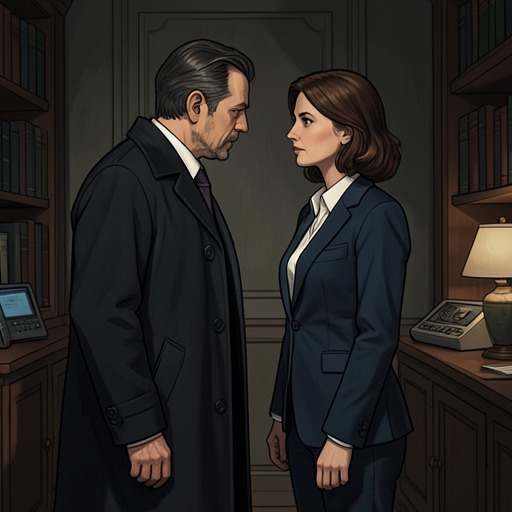
The breakdown also reopens Rowan's painful conflict with Mona. During Mona's long illness, Rowan had stood in the hospital doorway as Mona sobbed amid the machinery and clinical equipment. Rowan admits that she nearly used her power against her, an act that could have appeared at autopsy to be an ordinary stroke. Mona understood the danger and was frightened. Rowan explains that Mona was not ready to die and wanted to go to Quinn; she recognizes that she had terrified her. The episode reveals how Rowan's desperation to act, even under the sign of mercy, could become a threat to someone already subject to illness and dependence.
Mona's later account of her illness makes the emotional stakes clearer. She says that she had come to believe she ought to die, and that dying had become the central obligation of her life. For years she tried to make her decline easier for the people around her. She recalls a period when music, chocolate, and small comforts still mattered, followed by the loss of appetite and a growing uncertainty about whether she had ever had her child, Morrigan. These memories make Rowan's near-action part of a larger crisis in which neither medical authority nor supernatural power can simply settle what another person needs. Mona's decision to accept Lestat's offer of the Dark Blood belongs to her own expressed choice; Rowan's earlier impulse, by contrast, leaves her with fear and guilt.
When Rowan begins to emerge from the episode, she speaks passionately about the work she has built. She insists that Mayfair Medical serves people who have never encountered the extraordinary experiences that shape her own history, and that it matters because it helps them. She thinks of interns, residents, laboratory assistants, and research teams, and says she cannot be absent or fail them. The statement shows how deeply her identity is tied to the institution, but its rush and repetition also expose the pressure within that identification: her commitment to others offers purpose while making rest or retreat feel like betrayal.
Care, recovery, and unresolved strain
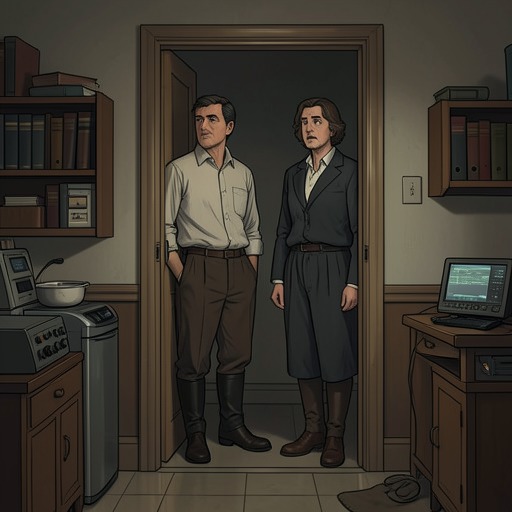
Michael seeks Lestat's help because he believes Lestat has a power over Rowan and had calmed her before. His request places Lestat in the role of intermediary between Rowan's private crisis and the family members trying to care for her. Mona is present as well, but Michael initially remains absorbed in Rowan's condition and does not register Mona's question about whether Rowan is catatonic as before. The scene conveys a household trying to respond with the means available to it—companionship, song, attention, and Lestat's unusual influence—without suggesting that any one intervention resolves the underlying history.
For Rowan, sanity becomes a fragile state of grace, and she regards Lestat as the force that has brought her back to it. The narration describes him as connecting two worlds for her. That role carries a tension of its own: his help can restore her to the present, but it does not erase what returns her to the past. Her breakdowns recur against the immense expectations attached to her work and the memories attached to her family, leaving recovery real but provisional.
Significance
Rowan's breakdown binds together the novel's opposing images of healing and burial. Mayfair Medical Center embodies her capacity to organize knowledge and care on a large scale; the garden becomes the place where what has been buried refuses to stay settled. Her own history includes prolonged illness, a coma, and serious brain damage, while the narrative also places her later mental crises amid supernatural powers and family secrets. The evidence supports no simple diagnosis that would explain all of these experiences. Instead, it presents the breakdown through actions and relationships: withdrawal from Michael, the return to the garden, her urgent defense of her work, and her recognition that she once frightened Mona.
The recurring crisis therefore marks the limit of Rowan's self-command, not the disappearance of her agency or achievements. She has built an institution that serves others and remains fiercely committed to those who depend on it, yet she cannot make professional purpose cancel grief or guilt. The contrast gives her breakdown its force: the woman who helps create a world of healing must still confront memories that do not yield to work, knowledge, or will alone.